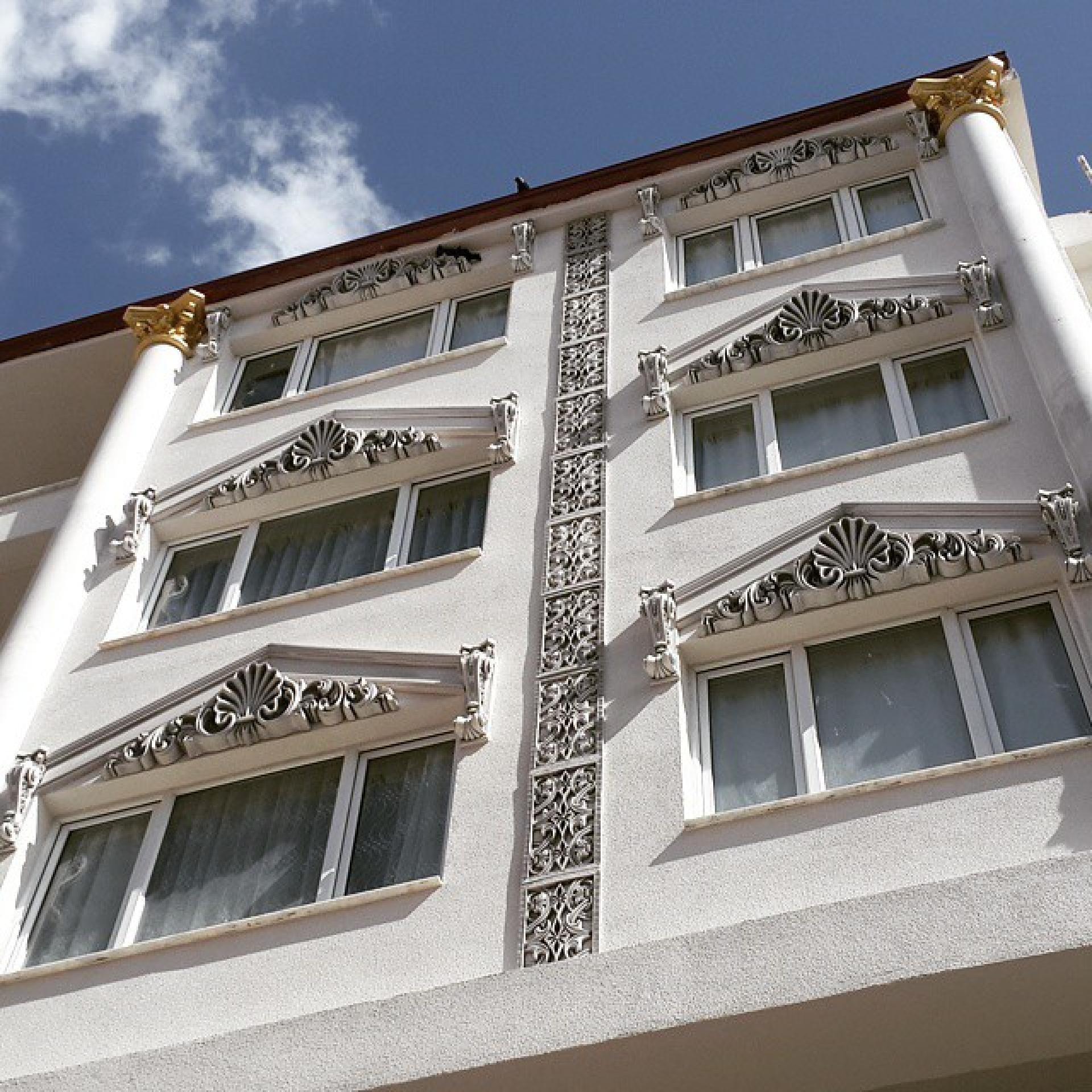
The hotel facade featured in the image showcases a timeless aesthetic built on a crisp white texture that beautifully softens harsh daylight transitions across the surface. The architectural character of the building relies on vertically rising, structured lines and relief forms that turn the windows into striking focal points. Contrasting elegantly with the blue sky, this light-colored exterior combines with Polure's high-density decorative elements to highlight the building's prestige and visual prominence.
In this application, the shell-motif P2838 window pediments crown the windows, giving the facade a highly distinctive identity. Each window unit achieves a harmonious look with elegant side brackets and bottom sills, while the P8105 vertical panels rising between the window lines eliminate empty spaces to create a rich, textured surface. The gold-leafed column capitals (P9950) atop the corner columns add a touch of luxury to the white-dominated design, establishing a perfect hierarchical balance.
All products used were manufactured using advanced polyurethane precast molding techniques. This method ensures that every motif is millimetrically identical while offering the dual advantages of lightweight structure and extreme durability, which are critical for exteriors. Exerting far less static load on the building compared to traditional precast concrete, these polyurethane elements also minimize labor time during installation, allowing for rapid project completion.
When designing such layouts for hotels and commercial properties, scaling the pediment models to match the window width is vital. For ceiling heights exceeding 3 meters, large-scale models with deep reliefs like the P2838 are preferred to enhance visual depth. Thanks to their moisture- and rain-resistant properties, these ornaments maintain their pristine shape for years even in coastal climates, making them a low-maintenance, high-return investment.
Design Details
The vertical rhythm of the facade is achieved through the symmetrical alignment of the windows and the embossed panels in between, aiming to make the building appear taller. The interaction of the white color with varying angles of sunlight casts distinct shadows on the deep-patterned pediments, adding depth to the facade. Gold-leafed details draw the focal point to the corners, defining the architectural framework. The choice of material allows intricate details to be applied over large surfaces without causing structural weight issues.