


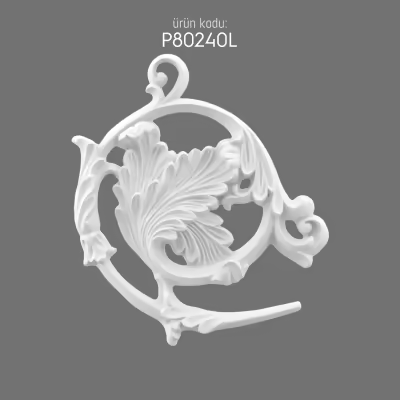
Classic Leaf Motif Polyurethane Decorative Ornament Model
Technical Specifications
| Material | Polyurethane |
|---|---|
| Surface | Carved detail, classic relief-worked embossed motif |
| Color | White |
| Density | 150-220 kg/m³ |
| Water Absorption | below 1% |
| Dimensional Stability Test | -20 °C / +70 °C |
| Fire Class | B2 (DIN 4102-1) |
| Paintable | Yes |
| Usage | Indoor + Outdoor |
| Water Resistant | Yes |
| Dimensions | 221 × 194 × 24 mm |
| Sales Unit | piece |
Details
Support
Technical drawing: Download DWG (77 KB)
Similar Products(Decorative Mouldings)


The P80240L model decorative ornament element is an aesthetic architectural accessory developed to revive historical textures in interior designs and building facades. While introducing noble depth to spaces through its asymmetrical curves and botanical reliefs, this piece unites the delicate lines of traditional hand carving with modern engineering. Thanks to the dynamic play of light and shadow across its surface, it instantly enriches flat walls or plain furniture, transforming them into captivating focal points.
The product features a compact design with dimensions of 22.1 cm in width, 19.4 cm in height, and 2.4 cm in thickness. Manufactured from high-density rigid polyurethane raw material at 150-220 kg/m³ density, this motif delivers wood-like surface hardness while remaining exceptionally lightweight. Its closed-cell composition provides moisture resistance and helps guard against water and rot, helping to reduce the material from swelling, cracking, or rotting in humid environments such as bathrooms or under demanding outdoor weather conditions.
The sweeping contours in the form of acanthus leaves and the refined circular volute detail at the top are among the most distinct hallmarks of the neoclassical style. The intricate carving details are preserved with high resolution during moulding, yielding a perfectly smooth surface finish. The factory-applied primer facilitates optimal adhesion of the final topcoat paint. Due to varying primer standards among paint manufacturers, applying an additional coat of primer remains an optional choice for the user.
This elegant piece boasts a versatile range of applications. It can be favored as a decorative filler element at the corners of living room wall panels, at the center of door and window overdoor pediments, on classical cabinet doors, or around fireplace mantels. Additionally, it serves as a complementary motif around ceiling medallions or at the corners of mirror frames. In exterior facade design, it acts as an aesthetic transition element above window architraves or beneath eaves alongside decorative corbels.
Distinguished by its crack-free durability compared to plaster equivalents and superior moisture resistance compared to natural timber, this decorative element installs with utmost ease. Following thorough surface cleaning, it is bonded using Polure Polfix adhesive and mechanically secured with screws for structural safety. After curing, joints are filled with sealant and sanded smooth, ready for painting. In outdoor applications, paints with UV resistance must be selected to safeguard the product against sunlight degradation.
- The P80240L leaf motif decorative ornament element offers a wide range of use in both interior architectural styling and exterior facade decoration
- In interiors, it is favored as a noble detail at the corner junctions of boiserie wall moulding projects in living rooms and corridors
- It creates an elegant accent motif on paneling behind headboards in bedrooms or on wood and plasterboard surfaces behind entertainment media units
- In classical furniture restoration, it is widely utilized on wardrobe doors, sideboard side panels, and the crests of mirror frames
- Assess water and moisture exposure using the product technical data, surface finish and installation details
- On exterior facades, it serves as an aesthetic highlight element at the upper corners of window architrave frames, beneath the keystones of arched passageways, or on the pediments of building entrance portals
- Coating it with UV-resistant paint in outdoor applications ensures a service life on par with the lifespan of the building itself
- Installation of the product is practical and swift
- First, the application substrate must be thoroughly cleared of dust, dirt, and moisture
- Polure Polfix adhesive is applied across the rear surface of the ornament, which is then pressed firmly into the designated position
- To prevent slippage during adhesive curing, mechanical fastening with fine screws is mandatory
- Once the adhesive has cured, screw heads and any perimeter seams are sealed using high-grade acrylic filler
- After the filler dries, the surface is smoothed with 180-220 grit sandpaper
- Over the factory primer, an optional supplementary coat of primer may be applied, followed by at least two coats of water-based or synthetic topcoat paint to complete the application
- Using UV-protective paint is mandatory for exterior installations
- Polyurethane decorative elements offer significant advantages in terms of effortless maintenance
- Accumulated interior dust can be readily wiped away using a dry or slightly damp microfibre cloth
- Never use abrasive chemicals, acidic solvents, or stiff brushes that could damage the painted surface
- Exterior installations should be inspected once a year for paint fading or micro-cracking, with localized paint touch-ups performed if necessary
- Since the water absorption rate is below 1%, outdoor products can also be cleaned by rinsing with low-pressure water
Is it resistant to outdoor weather conditions on exterior facades?
Yes, thanks to its water absorption rate below 1%, our product is unaffected by rain, snow, and humidity, and will not rot or swell. However, to prevent yellowing caused by solar ultraviolet (UV) radiation, it must be painted with a UV-resistant exterior paint when installed outdoors.
Can I use this ornament directly without painting it?
The product is delivered in white with a factory-applied primer. Although it can physically be mounted directly, painting it with at least two coats of water-based or synthetic paint is strongly recommended to protect polyurethane from UV yellowing and to achieve aesthetic completeness.
What advantages does it have over wooden or plaster motifs?
It is not brittle like plaster ornaments, boasts high impact resistance, and is very lightweight. Unlike wood, it does not rot, suffer insect damage, or warp over time when exposed to humidity. Furthermore, installation is significantly faster and cleaner.
Which adhesive should I use, and is silicone suitable?
Standard silicone adhesives must never be used during installation. For the most secure bond, Polure Polfix adhesive, specially formulated for polyurethane, should be used. Additionally, mechanical screw fastening is required during the curing period to support weight and prevent slippage.
How is it applied and painted on furniture?
After cleaning the furniture door or panel, the motif is adhered to the surface using Polure Polfix adhesive. It is secured from the front or back with fine brad nails or screws. After filling gaps and sanding, it can be painted to match the furniture finish using lacquer, acrylic, or synthetic furniture paint.