

Border profiles are essential architectural details that add character to interiors, create refined transitions between surfaces, and establish visual balance across walls and ceilings. High-density polyurethane removes many of the limitations associated with traditional building materials, giving these decorative elements excellent durability, remarkable lightness, and flexibility. With a density of 150-220 kg/m³, polyurethane provides a more practical and long-lasting alternative to heavier materials such as marble or plaster without adding unnecessary load to the building structure.
Polure Border Profiles elegantly conceal the transition between paint and wallpaper when used as wall moulding, while ceiling moulding designs add depth and definition to ceiling layouts. On exterior facades, they can be used as string courses to balance the building's proportions and give its architectural identity a refined finish. Their application is not only an aesthetic choice; these profiles also provide practical solutions during construction by concealing minor plaster irregularities and safely masking the expansion and contraction gaps that can occur where different construction materials meet. Mouldings are powerful design tools that shape the overall character of a space and directly influence the user experience.
Innovative Details That Transform Spatial Perception
The Polure Border collection goes beyond simple decoration, functioning as a versatile architectural tool that can alter how a space is perceived. In large living areas, horizontally applied borders can enhance the sense of width and perspective, creating a more spacious visual effect. When integrated with vertical panelling and wall moulding systems, they can create an optical impression of greater ceiling height, making rooms feel taller and more imposing.
In Neoclassical, Baroque, or Victorian-inspired interiors, profiles enhanced with gold leaf, silver gilding, or custom antiqued finishes can become a defining focal point. In contemporary and Brutalist designs, painting the profiles in the same matte tone as the wall creates subtle depth and a sophisticated layer of texture. This versatility gives interior architects and designers broad creative freedom across different project styles.
Design Variety with Plain and Patterned Models
The Polure Border collection includes carefully designed plain and patterned models to meet the aesthetic and functional requirements of a wide range of architectural projects:
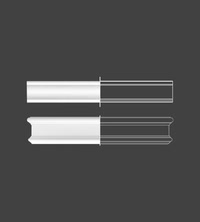
- Plain Models: Ideal for projects inspired by the clean design principles of modern, minimalist, Scandinavian, and contemporary industrial interiors. Clearly defined profiles such as P2001 (27x2400x123 mm) and P2002 (37x2400x150 mm) create spacious, orderly interiors with their crisp, understated lines. Their smooth surfaces distribute reflected light evenly, complementing the space's lighting scheme.
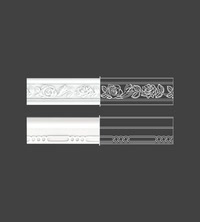
- Patterned Models: Carefully detailed for those who want to bring the historic richness of classical, avant-garde, and rustic decoration into living spaces. Available under codes such as P2001A (34x2160x123 mm), P2001B (44x2190x123 mm), P2001C, P2002A, and P2002B (65x2400x150 mm), these series introduce an artistic and distinguished reference through symmetrical botanical motifs, repeating geometric patterns, flowing scrolls, or traditional acanthus-leaf textures. Specially designed corner modules such as P2001K (460x460x55 mm) and P2002K (560x560x55 mm) complete the turns of straight strips at wall corners with a professional finish, creating a cohesive look. These details are frequently used with ceiling moulding designs and wall moulding systems.
Usage Areas
Polure Border Profiles add value to projects with a broad range of interior and exterior applications. They are particularly well suited to living rooms, dining rooms, master bedrooms, and wide hallways, where they can divide walls into upper and lower sections for both decorative and functional purposes. Applied to wall surfaces, they conceal transitions between wood panelling, wallpaper, and differently coloured paint, creating a clean finish. In luxury hotel lobbies, restaurants, and villa projects, they can be positioned parallel to the ceiling line or at a chosen height above the floor to expand the visual width of a space. In vertical applications, they form the basis of wall panelling and framing systems, adding classical depth and a refined appearance. In narrow, low-light entryways, combining them with mirror frames introduces additional depth and reflection, bringing a fresh dimension to the interior design. On exterior facades, they serve as string courses or window surround details, adding a refined architectural accent and layered visual interest.
Installation
Installing Polure Border Profiles is straightforward when the correct steps are followed. Surface preparation is essential: the wall, ceiling, or exterior facade must be dry, dust-free, and structurally sound. For precise corner joints, cut the profiles at accurate 45-degree angles using a fine-toothed mitre saw with adjustable speed. Apply the high-grab polyurethane-based Polifix adhesive to the rear mounting surface in a continuous bead, allowing it to extend very slightly beyond the edges for maximum contact. During placement, use a laser level to achieve precise horizontal or vertical alignment. While the adhesive cures, temporary fixing with steel nails or a pneumatic nail gun is recommended to prevent the material from shifting under its own weight. Following these steps helps keep your Polure Border Profiles secure and visually consistent for years to come.
Care Information
Maintaining the original appearance of Polure Border Profiles for many years is simple with the right routine. Thanks to their high-density structure, they can remain durable and retain their form over time when installed under suitable conditions with proper sealing. For routine cleaning, a soft, non-abrasive microfibre cloth and a lightly damp touch are sufficient. Avoid harsh chemical solvents, highly acidic cleaners, and abrasive brushes, as they may damage the surface texture and paint layer. Adding a mild, pH-neutral cleaner to the cleaning water helps remove dust and dirt gently while preserving the surface finish. By following these simple care guidelines, you can maintain the appearance and durability of your Polure Border Profiles.
Sizes and Prices
| Product code | Size (W × L × H) |
|---|---|
| P82060 | 17 × 2440 × 100 mm |
| P82083 | 17 × 2440 × 127 mm |
| P82084 | 19 × 2440 × 128 mm |
| P82047 | 20 × 2440 × 85 mm |
| P82062 | 20 × 2440 × 81 mm |
| P85409 | 22 × 2400 × 95 mm |
| P82072 | 23 × 2440 × 110 mm |
| P82076 | 23 × 2440 × 113 mm |
| P85036 | 23 × 2400 × 82 mm |
| 2PBOR60 | 25 × 2400 × 60 mm |
| P2001 | 27 × 2400 × 123 mm |
| P85025 | 28 × 2400 × 62 mm |
| P85408 | 28 × 2400 × 97 mm |
| P2001A | 34 × 2160 × 123 mm |
| P2001C | 34 × 2180 × 123 mm |
| P82058 | 35 × 2430 × 94 mm |
| P85407 | 35 × 2400 × 87 mm |
| P2002 | 37 × 2400 × 150 mm |
| P85024M | 40 × 2400 × 100 mm |
| P2001B | 44 × 2190 × 123 mm |
| P2002A | 52 × 2160 × 185 mm |
| P2002C | 53 × 2400 × 150 mm |
| P2002B | 65 × 2400 × 150 mm |
| P2001K | 460 × 460 × 55 mm |
| P2002K | 560 × 560 × 55 mm |


