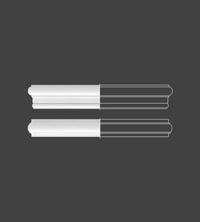
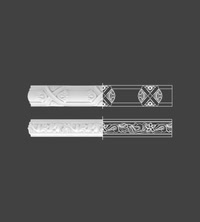


Polure's Wall Moulding collection offers a contemporary approach to defining architectural character and introducing proportional depth to interior spaces. Developed for interior designers, architects, and homeowners seeking to articulate walls and ceilings with refined detail, these profiles are manufactured from high-density polyurethane. Delivering clear advantages over traditional plaster or timber trims, Polure mouldings ensure lasting surface stability and functional performance.
The structural characteristics of rigid polyurethane make these panel mouldings exceptionally practical for interior fit-outs. Manufactured with a density of 150-220 kg/m³, the profiles are remarkably light yet offer substantial impact resistance comparable to dense natural materials. The self-weight of the product and its fastening requirements should be evaluated alongside the substrate and supporting structure. Engineered with closed-cell resistance to moisture and ambient dampness, these profiles prevent cracking, flaking, rotting, or insect infestation commonly seen in plaster and wood. Polure mouldings preserve their exact profile contours in high-humidity zones like bathrooms and kitchens.
Design Variety: Patterned and Plain Profiles
Polure provides a versatile range of profiles tailored to different interior design concepts:
- Patterned Mouldings for Classic and Detailed Schemes: Ideal for interior schemes requiring classical proportions, decorative wall frames, and traditional boiserie panelling inspired by Neoclassical, Baroque, or Art Deco design. Profiles such as the delicately detailed P82009 or the bolder P82052 (38x88 mm) create balanced wall framing. Intricately ornamented profiles including P82010, P82012, and P82017 introduce historical relief patterns into modern residential and hospitality interiors.
- Flat and Minimalist Profiles for Contemporary Interiors: Plain moulding designs cater to clean-lined, modern architectural concepts. Profiles like P85002 allow architects to divide extensive wall surfaces, generate discrete transition reveals along ceilings, or frame contemporary panel layouts with geometric clarity. Every Polure profile is cast in precision CNC-machined moulds to guarantee crisp edges and consistent cross-sectional dimensions.
Functional Applications in Architectural Layouts
Beyond surface ornament, wall mouldings function as dynamic architectural tools to calibrate spatial geometry:
- Correcting Spatial Proportions: Installing vertical moulding panels on lower ceilings creates an optical lengthening effect, expanding the perceived height of the room.
- Defining Focal Zones: Medium-width profiles such as P82019 or P82024 can be assembled into wall frames to accentuate artwork, mirrors, sconce lighting, or contrasting wall coverings.
- Concealing Substrate Imperfections: Alignment irregularities and minor surface transitions across drywall or plaster substrates can be neatly covered by panel mouldings for a flush, refined finish.
- Ready for Direct Painting: Supplied with an applied factory white primer, Polure mouldings can be coated immediately after installation using water-based interior paints in any specified palette.
Supplied in standard 240 cm lengths, Polure profiles minimize cutting waste on site to ensure material efficiency. Formulated with UV resistance, they maintain physical integrity across both interior settings and exterior decorative facades.
Usage Areas
Residential Interiors:
- Living and Dining Rooms: Geometric wall panelling (boiserie), chair rails, and framing elements configured around ceiling roses or lighting tracks.
- Bedrooms: Symmetrical moulding grids applied behind headboards to introduce tailored architectural accents.
- Hallways and Foyers: Dado rails and lower-wall framing along circulation paths to break up expansive walls and add visual rhythm.
- Bathrooms and Kitchens: Moisture-resistant trims used for decorative framing or framing junctions along tiled surfaces with low water absorption (below 1%).
- Hotels and Fine Dining: Full-height panel mouldings in lobbies, lounges, and guest suites that reflect high-end hospitality standards.
- Offices and Boardrooms: Clean perimeter wall bands and conference room panels that reinforce an organized, professional image.
- Retail Spaces and Showrooms: Distinct backdrop panels and display framing designed to highlight merchandise.
Installation
1. Surface Preparation: Ensure the wall or ceiling substrate is dry, structurally sound, clean, and free from loose dust or grease. Uneven substrates must be levelled prior to layout.
2. Layout and Marking: Use a laser level or spirit level to mark out reference gridlines directly onto the installation surface. Precise layout is vital for symmetrical panels.
3. Precision Miter Cuts: For crisp 90-degree corner joints, cut mouldings at 45-degree angles using an electric miter saw or manual miter box fitted with a fine-toothed blade. Clean cut edges ensure tight hairline joints.
4. Adhesive Bonding: Apply an even bead of Polifix polyurethane-based assembly adhesive along the rear bonding channels of the profile. Position the moulding against the marked guidelines, pressing firmly along its length until initial grip takes hold. Clean off excess adhesive along edges immediately using a damp cloth before curing.
5. Joint Filling and Finishing: Fill all miter joints and gaps against the substrate with a suitable acrylic joint filler. Once dry, lightly sand smooth with fine-grit sandpaper. Apply your chosen water-based paint directly over the factory-primed surface to complete the installation.
Care Information
Routine Cleaning: Wipe down profile surfaces periodically using a soft, damp microfiber cloth. Avoid harsh chemical solvents or abrasive pads that could damage the paint layer.
Moisture Resistance: The closed-cell composition prevents moisture absorption, ensuring profiles installed in bathrooms and kitchens will not warp, rot, swell, or support fungal growth.
Long-Term Durability: With notable impact resistance against everyday knocks and scrapes, these mouldings are engineered to maintain their surface geometry for decades under standard use.
Repainting and Touch-Ups: Wall colour schemes can be updated at any time by applying a new coat of water-based paint directly onto the existing surface without full stripping. Minor surface scuffs can be filled with standard acrylic paste, lightly sanded, and touched up seamlessly.
Sizes and Prices
| Product code | Size (W × L × H) |
|---|---|
| P85003 | 12 × 2400 × 16 mm |
| P85002 | 14 × 2400 × 24 mm |
| P82012 | 16 × 2440 × 47 mm |
| P82019 | 17 × 2440 × 52 mm |
| P82022 | 17 × 2440 × 56 mm |
| P85008 | 20 × 2400 × 40 mm |
| P85010 | 20 × 2400 × 43 mm |
| P85403 | 20 × 2400 × 30 mm |
| P82024 | 21 × 2440 × 59 mm |
| P851350 | 21 × 2400 × 36 mm |
| P85016 | 22 × 2400 × 50 mm |
| P82009 | 23 × 2440 × 42 mm |
| P82010 | 24 × 2418 × 40 mm |
| P82017 | 24 × 2440 × 50 mm |
| P82015 | 27 × 2400 × 50 mm |
| P85406 | 27 × 2400 × 57 mm |
| P82052 | 38 × 2440 × 88 mm |
| P85015 | 40 × 2400 × 40 mm |


