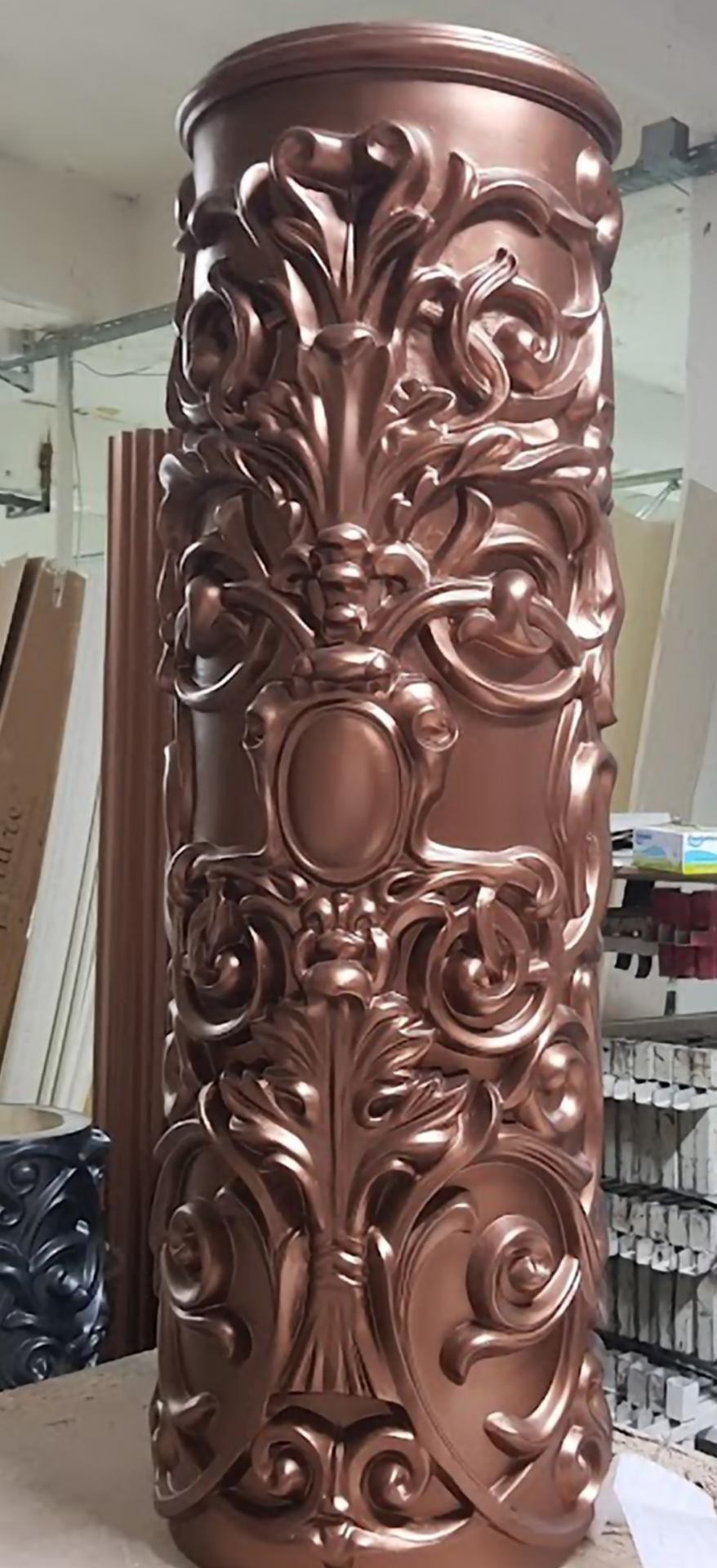
Exhibited in a workshop setting, this custom-designed polyurethane column appears as a high-relief work of art, enhanced by metallic pigments under industrial lighting. The contrast between the raw texture of the space and the refined craftsmanship of the product highlights the precision in every curve of the column. The distribution of light across the surface accentuates the matte and glossy transitions of the bronze finish, emphasizing the cylindrical structure of the form.
The examined P5540 model polyurethane column shaft embodies the most characteristic elements of Baroque and Rococo styles. Intertwined acanthus leaves, spiral plant motifs, and an oval medallion placed on the central axis represent the rich visual language of classical architecture. Thanks to its high-density polyurethane structure, such complex and deep motifs are displayed clearly while helping reduce breaking or shedding over time.
The precast casting technology used in the production process guarantees consistent material density and smooth surface quality at every point of the product. The CNC-supported mold preparation phase ensures perfect symmetry in the motifs, while its lightweight nature provides significant labor savings during the assembly stage. The surface structure, fully compatible with metallic paint applications, allows the product to move away from a plastic appearance and give the feel of cast metal.
For designers, these densely patterned columns are ideal for creating focal points in spacious lobbies, luxury restaurant entrances, or high-ceilinged halls. You can achieve visual balance by combining the P5540 model with more simply designed capitals and bases. If you want to create an antique atmosphere in your space, it is recommended to choose finishes with enhanced depth through aged bronze or leaf applications, as seen in the visual.
Design Details
The primary design success lies in the monochromatic bronze color choice, which highlights details through light and shadow rather than overshadowing the form's complexity. The botanical spirals on the vertical axis reinforce the perception of spatial height by directing the eye upward. The sharp edge details offer a level of clarity unachievable in cast plaster or wood, blending modern and classical craftsmanship.