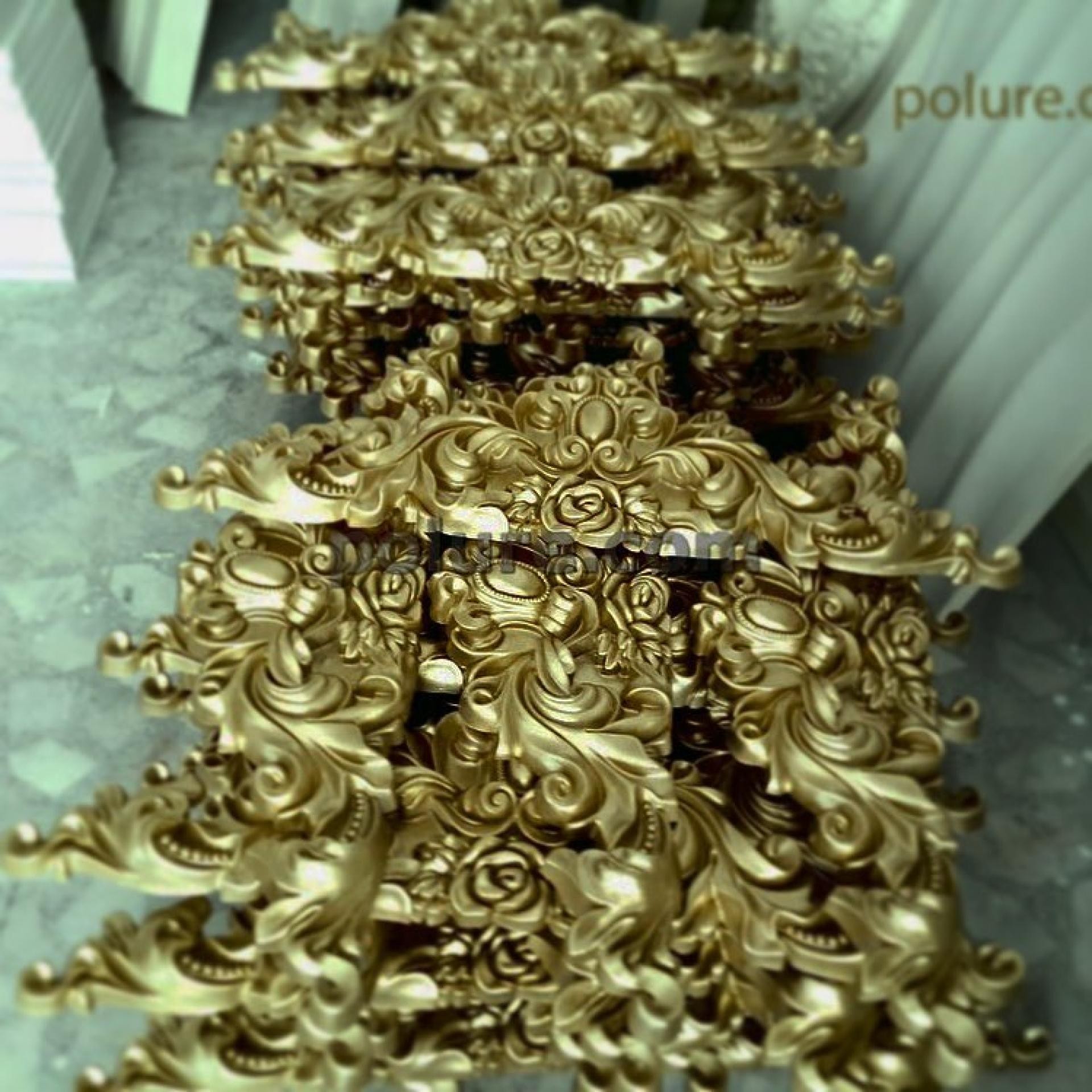
This showcase highlights the flawless precision of mass-produced floral pediment designs, one of the most majestic details of classical architecture. At the center, the gold-leaf finished pieces create deep, characteristic shadows under soft ambient lighting, emphasizing their three-dimensional form. Combining the aesthetics of traditional hand-carving with modern technology, this composition elevates spatial depth and the perception of luxury through its rich texture.
The featured P2833 polyurethane pediment carries distinct traces of the Baroque era, with a stylized central rose motif flanked by sweeping acanthus leaf scrolls. Ranging in width from approximately 60 to 80 cm, these decorative elements are made of high-density rigid foam. Unlike wood, they are resistant to warping, cracking, and splitting over time. The millimeter-perfect consistency across the production line demonstrates Polure's precision molding technology and sharp attention to detail.
High-pressure injection systems used in manufacturing ensure that even the finest leaf veins are flawlessly rendered on the surface. Supplied as pre-cast decorative elements, they are ready for direct installation without requiring any carving or trimming on-site. These products can be customized with gold leaf or various patina techniques, and thanks to polyurethane's excellent paint adhesion, they retain their color vibrancy for years.
These heavily ornamented pediment models are ideal for embellishing overdoor arches in high-ceilinged living rooms, completing fireplace mantels, or crowning large mirror frames. If you are aiming for a neoclassical or avant-garde design, pairing the P2833 model with simple wall paneling (wainscoting) draws the focus to this decorative centerpiece, creating a balanced sense of grandeur in the space.
Design Details
The high relief depth of the product enhances visual richness by creating a natural play of light and shadow on the surface. The contrast between matte and glossy gold finishes, combined with the smooth texture of the polyurethane, evokes a sense of metallic weight. Adhering to classical architectural principles, the symmetrical balance in the design provides visual stability along the vertical axis of the space. Additionally, the lightweight nature of the material allows such a heavily detailed piece to be safely installed on vertical surfaces.