

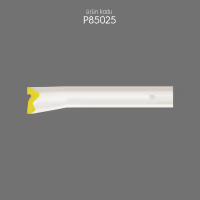
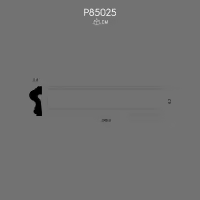
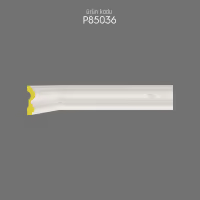
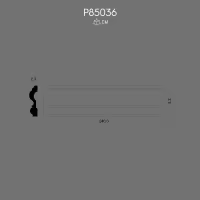
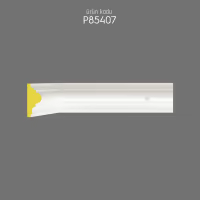
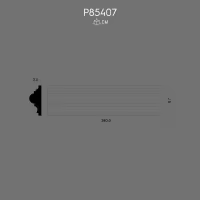
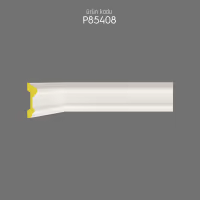
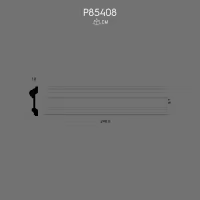
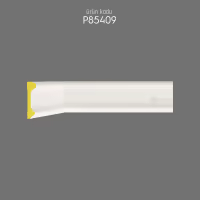
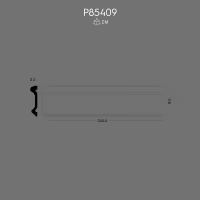
Mouldings, indispensable details of architectural design, are strip-form decorative elements that add character to spaces, create aesthetic transitions between surfaces, and provide visual balance on wall and ceiling planes. High-density polyurethane eliminates the limitations of traditional building materials, lending these special design elements superior durability, remarkable lightness, and unique flexibility, making them the preferred choice for modern projects and restoration work. With an average density of 200-250 kg/m³, they offer much more practical and long-lasting solutions compared to heavy alternatives like marble or plaster, without adding extra load to building support systems.
Polure Mouldings elegantly conceal paint and wallpaper joint lines in interior wall paneling applications, while ceiling moulding models add depth and richness to ceiling designs. On exterior facades, they are used as floor string courses, balancing the building's overall proportion and adding a prestigious touch to its architectural identity. The structural use of these profiles is not merely a visual preference; it also provides practical engineering solutions such as concealing minor plaster irregularities on walls that may occur during construction, and safely camouflaging expansion and contraction gaps caused by friction between different building materials. Mouldings are powerful design tools that shape the overall atmosphere of a space and directly influence user experience.
Innovative Touches in Spatial Perception
Polure's Moulding collection goes beyond being mere aesthetic embellishments, serving as powerful architectural tools that transform the volume and perception of a space. Especially in large living rooms, horizontally applied mouldings enhance the perception of width and perspective, creating an airy atmosphere. When integrated with vertical paneling and wall moulding systems, they create an optical illusion regarding ceiling height, giving the impression of taller and more magnificent spaces.
In designs inspired by Neoclassical, Baroque, or Victorian eras, profiles enriched with gold leaf, silver gilding, or special antique patina paint techniques can form the focal point of a room. In contemporary and brutalist designs, they can be painted in the same matte tone as the wall, providing a minimalist depth and a sophisticated textural layer. This versatility offers interior architects and designers unlimited creative freedom in their projects.
Design Variety with Plain and Patterned Models
The Polure Moulding collection consists of meticulously designed plain and patterned models to meet the aesthetic and functional requirements of all types of architectural projects:
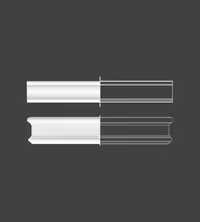
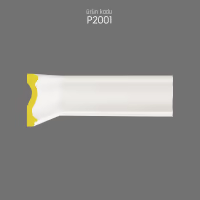
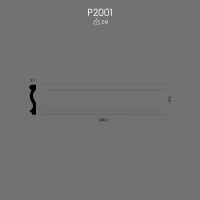
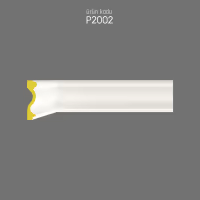
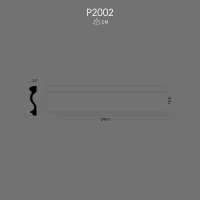
- Plain Models: Ideal for projects embracing the philosophy of simplicity in modern, minimalist, Scandinavian, and contemporary industrial designs. Clean-cut profiles like P2001 (27x2400x123 mm) and P2002 (37x2400x150 mm) create airy and orderly spaces with their sharp, understated lines. Their smooth surfaces uniformly distribute light reflections, perfectly harmonizing with the space's lighting scheme.
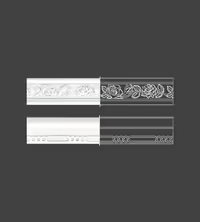
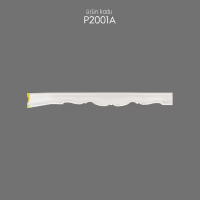
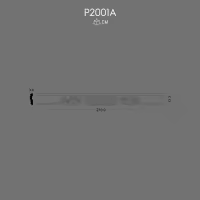
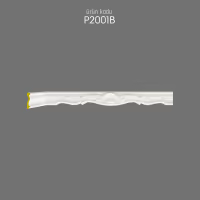
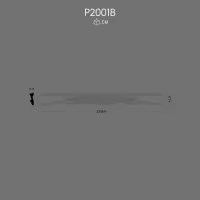
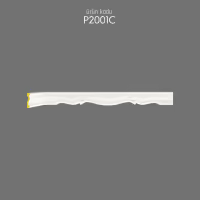
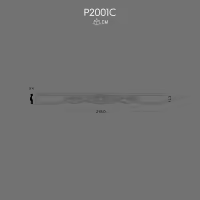
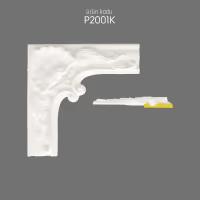
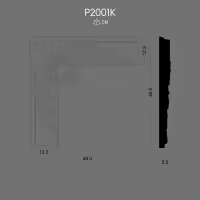
- Patterned Models: Carefully detailed for those who wish to bring the historical grandeur of classic, avant-garde, and rustic decoration into their living spaces. These series, offered with codes such as P2001A (34x2160x123 mm), P2001B (44x2190x123 mm), P2001C, P2002A, and P2002B (65x2400x150 mm), add a noble and artistic reference to spaces with symmetrical floral motifs, geometric repetitions, swirling waves, or traditional acanthus leaf textures. Specially designed corner modules like P2001K (460x460x55 mm) and P2002K (560x560x55 mm) complete the turns of straight strips at wall corners with a professional finish, offering a cohesive aesthetic. These details are frequently used in ceiling moulding models and wall trims.
Usage Areas
Polure Mouldings offer a wide range of applications in both interior and exterior spaces, adding value to your projects. They are ideal for aesthetically and functionally dividing walls into upper and lower sections, especially in living rooms, dining rooms, master bedrooms, and wide corridors. They seamlessly conceal transitions at the intersection points of various wall coverings (paint, wallpaper, wood panels) on wall surfaces, ensuring a smooth finish. In luxury hotel lobbies, restaurants, and villa projects, they are positioned parallel to the ceiling line or at a certain height from the floor to expand the horizontal perception of the space. In vertical applications, they form the basis of wall paneling and framing systems, giving spaces a classic depth and sophisticated appearance. In narrow and dimly lit entryways, when used with mirror frames, they add unexpected depth and reflective area to the space, bringing an innovative dimension to interior architectural design. On exterior facades, they elegantly emphasize the building's architecture as a floor string course or window frame detail, adding a layered aesthetic to the facade.
Installation
Installing Polure Mouldings is an easy and efficient process when the correct steps are followed. The first stage for a successful application is surface preparation; the wall, ceiling, or exterior facade surface where the product will be applied must be absolutely dry, dust-free, and structurally sound. To achieve flawless corner joints, products should be cut at precise 45-degree angles using a fine-toothed, rotary miter saw. When applying Polifix adhesive, a high-adhesion polyurethane-based adhesive, to the profile's rear mounting surface, it is important to apply it in a continuous strip, slightly overflowing at the edges for maximum adhesion. During placement, using a laser level to ensure millimeter-perfect horizontal or vertical alignment is key to a professional finish. Temporary fastening with steel nails or a pneumatic nail gun is recommended to prevent the material from sliding due to its own weight during the adhesive's drying time. These steps ensure your Polure Mouldings remain aesthetic and robust for many years.
Care Information
Maintaining the pristine aesthetic of your Polure Mouldings for many years is quite easy with correct and simple care routines. Thanks to their high-density structure, when applied under proper installation and insulation conditions, they demonstrate durability without form loss for over 20 years. For periodic cleaning of the products, a non-abrasive, soft microfiber cloth and a slightly damp touch are sufficient. The use of harsh chemical solvents, highly acidic cleaners, or abrasive brushes that could damage the surface texture and paint layer should be strictly avoided. Adding a mild, pH-neutral cleaner to the cleaning water helps gently remove dirt and dust while preserving the surface's luster. By adhering to these simple maintenance guidelines, you can maximize the aesthetic appeal and durability of your Polure Mouldings.