Integrating Antique Architectural Heritage into Modern Structures
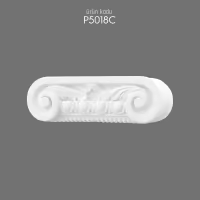
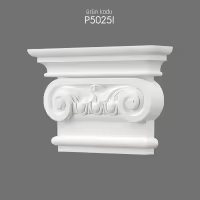
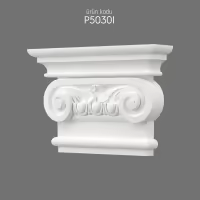
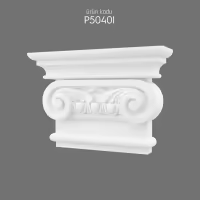
The Ionic order, one of the most distinctive symbols of classical Greek and Roman architecture, is renowned for its elegant volutes and balanced proportions. Our Pilaster Column Ionic Capital models are designed to bring this timeless aesthetic into contemporary architectural projects. Serving as the crowning element for flat, wall-mounted column systems, these capitals add sophisticated depth to any space. Crafted from high-density rigid polyurethane, they eliminate the heavy weight and high costs associated with traditional stone or marble carving.
Dimensional Variety for Projects of All Scales
Our extensive product range is engineered to meet the demands of any architectural scale, from boutique residential designs to grand commercial spaces:
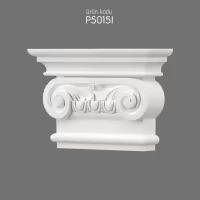
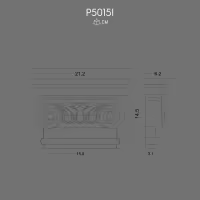
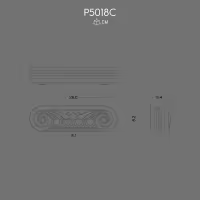
- Compact Options: Models with minimal dimensions like P5015I (62x212x145 mm) are ideal for narrow hallways or rooms with standard ceiling heights.
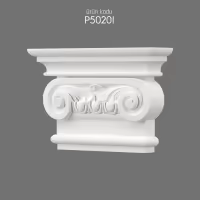
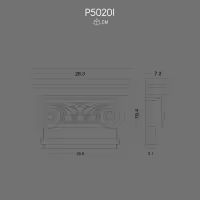
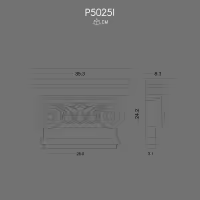
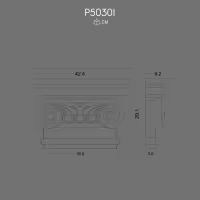
- Mid-Range Designs: Models such as P5020I and P5030I (with widths up to 424 mm) offer a balanced, elegant look for residential living rooms and door pediment applications.
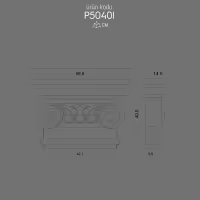
- Large-Scale Solutions: The P5040I model (145x595x408 mm) delivers a majestic presence in high-ceilinged hotel lobbies, villa entrances, or grand event halls.
High Material Durability and Technical Specifications
With a density range of 150-220 kg/m³ (production target ~160 kg/m³), our products offer a hardness comparable to wood. This high density ensures excellent impact resistance while minimizing the risk of breakage during transport and installation. Thanks to their closed-cell structure, the water absorption rate is under 1%, preventing swelling, rotting, or mold growth in humid environments. Capable of maintaining their shape in temperatures ranging from -100 °C / +80 °C, these capitals provide outstanding dimensional stability without expanding or cracking.
Surface Preparation and Painting Guidelines
Our products are shipped with a factory-applied primer coat that enhances topcoat adhesion. They can be painted with water-based or synthetic paints. However, please note that paint manufacturers typically do not guarantee applications done without their own recommended primers. Therefore, applying an additional primer post-installation is entirely optional and at the customer's discretion. Polure does not assume liability for paint performance. For exterior applications, using UV-resistant paint is mandatory to protect the products from sun damage.
Usage Areas
Our Pilaster Column Ionic Capitals offer versatile application possibilities. In interior design, they accentuate vertical lines on the walls of luxury residences, villas, and hotel lobbies. They are highly favored for framing wall panels behind TV units, flanking bookshelves in classical libraries, and crowning decorative wall niches. Additionally, they can be installed beneath door and window pediments to enrich the trim. In commercial spaces, they visually enhance ceiling heights in VIP restaurant areas, theaters, and conference halls. For exteriors, they add depth and grandeur to building entrance portals, floor moldings, and window-side column decorations.
Installation
For a successful installation of Pilaster Column Ionic Capitals, follow these steps: 1. Surface Preparation: Ensure the wall or facade surface is clean, dry, and free of dust. 2. Cutting: If necessary, perform 45-degree miter cuts using precision cutting machines or fine-toothed hand saws. 3. Adhesive Application: Apply polyurethane (PU) construction adhesive to the back of the product. Do not use silicone-based adhesives. 4. Mechanical Fastening: To prevent slippage and ensure safety before the adhesive fully cures, mechanical fastening with screws is MANDATORY. 5. Surface Finishing: Fill screw heads and joints with interior or exterior grade putty. Once dry, sand smooth using 180-220 grit sandpaper. 6. Painting: After applying an optional extra primer coat if desired, finish with at least two coats of water-based or synthetic paint. UV-resistant paint is mandatory for exterior installations.
Care Information
Thanks to their high-density rigid structure, these capitals require minimal maintenance. Cleaning with a soft, slightly damp cloth is sufficient. Avoid harsh chemical solvents, hydrochloric acid, or abrasive cleaning agents that could damage the paint. Since the closed-cell structure keeps water absorption under 1%, there is no risk of moisture retention, mold, or bacterial growth. For exterior applications, an annual inspection is recommended; touching up any weathered putty or paint on joints will significantly extend the product's lifespan.
