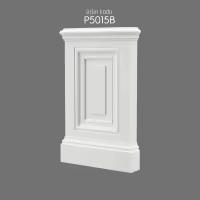


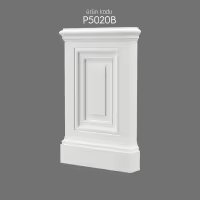
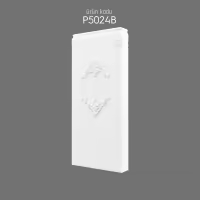
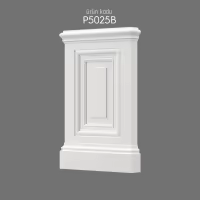


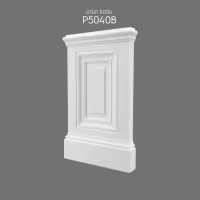


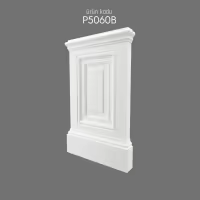


In architectural design, the intersection where vertical lines meet the floor is crucial for structural balance and aesthetic harmony. Pilaster Column Base Plinths perfectly complete this visual and structural transition at the base of wall-mounted column systems. Crafted from high-density polyurethane raw material, these exclusive elements in the Polure collection offer a density of 150-220 kg/m³ (production target ~160 kg/m³), providing a wood-like hardness while remaining remarkably lightweight. Inspired by the load-bearing column bases of classical architecture, these designs form the foundation of wall paneling and wainscoting projects, ranging from modern luxury villas to prestigious hotel lobbies.
Structural Diversity and Dimensional Alternatives
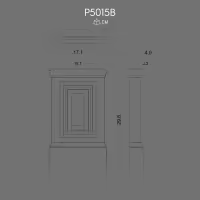
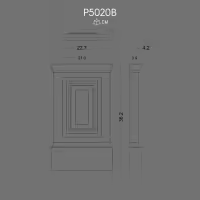
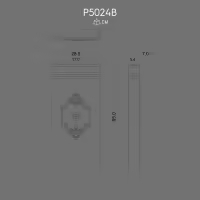
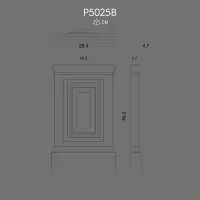
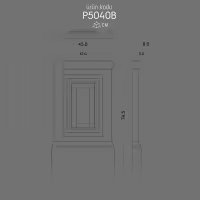
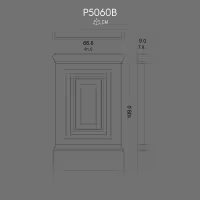
Visual scaling is a key criterion for successful architectural projects. For spacious interiors with high ceilings, large-scale models like P5060B and P5050B add depth and define the floor transition. For projects seeking cleaner, neoclassical, or minimalist lines, the P5015B and P5016D models stand out with their sleek profiles. In wall paneling applications, selecting the correct base according to the column shaft's width is essential. For instance, the P5024B model, measuring 285 mm in width and 650 mm in height, perfectly balances the vertical axis of the space by pairing seamlessly with wide-profile pilaster shafts. For intricate designs, compact models like P8211 or transitional forms such as P5020B, P5018B, and P5025B are highly preferred. Thanks to CNC-precision molds, the steps and chamfer details of each model are exceptionally sharp and smooth.
Technical Superiority and Durability Standards
Compared to traditional building materials, these rigid PU-based plinths offer significant operational and long-term advantages. Plaster-based products are fragile and prone to crumbling in humid environments over time, while wood is susceptible to warping, shrinking, and rotting when exposed to moisture. In contrast, Polure's products feature a closed-cell structure with a water absorption rate of less than 1%. This negligible rate ensures dimensional stability even upon contact with water, preventing shrinkage, expansion, or warping. Capable of maintaining their shape across a wide temperature range from -100 °C / +80 °C, these durable elements can be safely used in both interior spaces and challenging exterior facade conditions. Furthermore, they enhance safety with their self-extinguishing, flame-retardant properties when the ignition source is removed.
Surface Preparation and Painting Guidelines
Our products are delivered with a specialized factory primer applied to the surface, designed to enhance the mechanical adhesion of the topcoat. Both water-based and synthetic paints can be easily applied. However, there is a crucial point to consider: although the factory primer prepares the surface for painting, paint manufacturers do not guarantee applications made without their own system primer. Therefore, applying an additional primer coat before the topcoat is optional and remains entirely the customer's responsibility. Polure does not assume liability for the paints used during application or any subsequent paint issues. For exterior applications, UV-resistant exterior paints must be used to prevent unpainted material from yellowing due to UV rays.
Classical Architectural Orders and Combination Guide
Throughout history, in classical architectural orders such as Doric, Ionic, and Corinthian, column bases have symbolized the grounded strength of a structure. This rule also applies to pilaster systems, which are wall-mounted column structures. The top seating surface (depth and width) of the selected polyurethane pilaster base should align perfectly with or slightly exceed the column shaft resting on it. This visual hierarchy is key to achieving a professional look in interior design. Interior designers and architects utilize these elements not only as column bases but also as plinth blocks at the intersection of baseboards and door casings. This versatile application prevents wear at the baseboard level while adding rich depth to door and wall transitions.
Usage Areas
Pilaster Column Base Plinths are highly versatile decorative elements with a wide range of applications. In interior design, they are frequently preferred to seamlessly connect decorative column shafts with the floor in wall paneling and wainscoting projects within hotel lobbies, theaters, restaurants, and luxury residential projects. They serve an aesthetic function as transition blocks, particularly where baseboard lines end and door casings begin. They can also be positioned as decorative supports in fireplace mantel designs and at the lower boundaries of wall niches. For exterior applications, they are used in villa entrance porticos, at the base of vertical decorative columns framing windows, and at the ground connections of pediment designs at building entrances. Thanks to their high-density structure, they provide a protective shield at ground level where impacts are common, while offering complete resistance to outdoor weather conditions.
Installation
To ensure a long-lasting and flawless installation of the Pilaster Column Base Plinth, the following technical steps must be followed in order: 1. Surface Preparation: The wall and floor surfaces where the application will be made must be completely dry, clean, and free of dust and grease. 2. Cutting: When necessary, 45-degree miter cuts can be executed using precision saws. 3. Gluing: Only polyurethane (PU) assembly adhesive should be applied to the back of the product. Silicon-based adhesives must absolutely not be used. 4. Mechanical Fastening: To prevent the material from slipping during the curing of the adhesive and to ensure structural safety, mechanical fastening with screws is MANDATORY. 5. Filling and Sanding: Screw holes and joints must be filled with a high-quality joint filler; once dry, sand smooth using 180-220 grit sandpaper. 6. Painting: After cleaning the surface, apply an optional extra primer coat followed by two coats of topcoat paint. For exterior applications, the use of UV-resistant paint is mandatory, and joints and screw points must be filled with exterior-grade filler.
Care Information
Manufactured from rigid PU material, these plinths are designed to offer high impact resistance, as they are positioned at the baseboard level where foot traffic is heavy. Maintenance is highly practical; these elements can be easily cleaned using a damp, soft microfiber cloth. Abrasive chemicals, acidic solvents, or wire brushes must never be used during cleaning. Thanks to its non-porous, closed-cell structure, the surface is stain-resistant, unaffected by moisture, and will not swell or warp. In the event of accidental severe impacts over the years, the damaged area can be quickly filled with joint compound, sanded, and spot-painted to restore its original appearance.
