Classic and Modern Lines in Wall Decoration
Effectively utilizing wall surfaces in interior design is a fundamental element that defines a space's overall atmosphere and architectural identity. From traditional palace architecture to modern residential designs, wall paneling and framing stand out as essential aesthetic requirements. Polyurethane patterned moulding models are key players in this decorative transformation. Patterned borders and ornate moulding designs add depth to flat walls and bring movement to monotonous surfaces. From classic Roman motifs to neoclassical lines, and from heavy Baroque ornamentation to minimalist geometric patterns, Polure offers an alternative for every taste. A decorative wall moulding chosen in the correct scale establishes a balanced visual rhythm in your living spaces.
Technical Specifications and Structural Advantages
The rigid PU raw material used in our production is molded under high pressure to achieve a hardness close to wood. With a density of 150-220 kg/m³ (production target ~160 kg/m³), this material ensures easy installation due to its lightweight structure while offering high impact resistance. Its density is strictly kept away from heavy and hard-to-apply levels like 300-400 kg/m³. Thanks to its closed-cell structure, its water absorption rate is below 1%, completely preventing the material from being affected by moisture, humidity, or water. Therefore, it can be safely used in wet areas such as bathrooms and kitchens. With a temperature resistance ranging from -100 °C / +80 °C, these products maintain their shape under all temperature variations, without shrinking, expanding, or warping. This dimensional stability prevents cracking at the joints over time.
The surface of our products is shipped with a special factory-applied primer. This factory primer prepares the surface for paint adhesion. However, it should be noted that paint manufacturers do not guarantee painted surfaces unless their own primers are used; therefore, applying an additional primer is optional and entirely up to the customer. As Polure, we do not provide warranties for the paints used and assume no liability. If the products are exposed to sunlight without paint for a long time, yellowing may occur. For this reason, the use of UV-resistant paints is mandatory, especially in exterior applications. In terms of fire resistance, our products are classified as highly flame-retardant and feature self-extinguishing properties once the flame source is removed.
Various Size and Model Alternatives
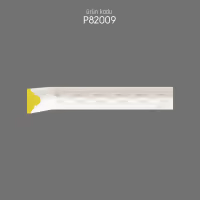
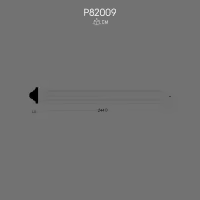
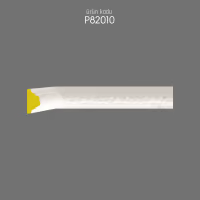
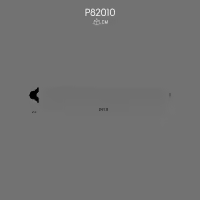
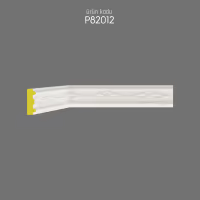
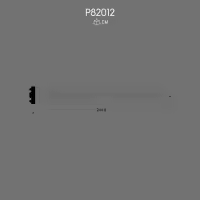
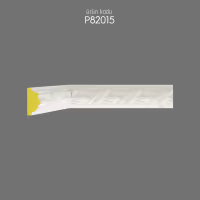
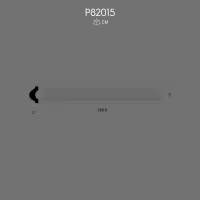
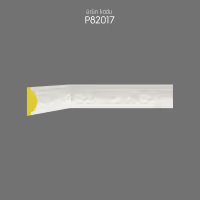
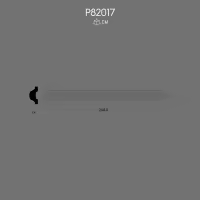
We offer a wide range of products designed in different sizes to match the architectural scale of your projects. For those looking to create thinner and more elegant frames on walls, the P82009 (23x2440x42 mm) and P82010 (24x2418x40 mm) models are ideal choices. These models bring a classic decorative touch to walls with their finely crafted motifs. For projects seeking a minimalist yet distinct depth, the P82012 (16x2440x47 mm) model stands out with its smooth surface quality. To create bolder and more magnificent framing in spacious living rooms and high-ceilinged spaces, the P82015 (27x2400x50 mm) or P82017 (24x2440x50 mm) models are preferred.
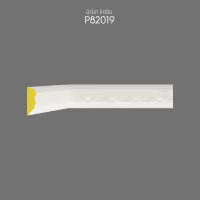
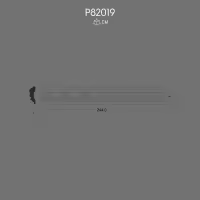
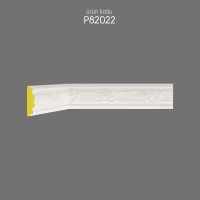
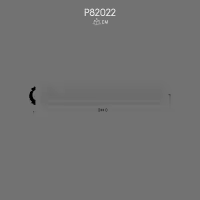
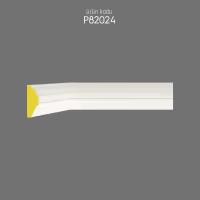
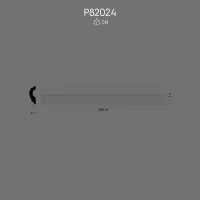
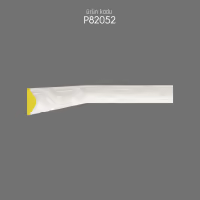
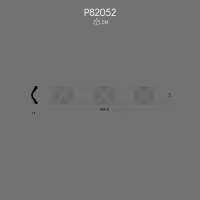
For interior designers wishing to add three-dimensional movement to walls through light and shadow play, the P82019 (17x2440x52 mm) and P82022 (17x2440x56 mm) models serve as aesthetic alternatives. Combining classic details with modern production standards, the P82024 (21x2440x59 mm) model offers versatile use for both interior and exterior spaces. In large-scale, palace, or villa-concept projects, the P82052 model, measuring 38x2440x88 mm, creates a powerful visual impact for a grand, focal-point look.
Material Comparisons: Why This Material?
- Superiority Over Plaster: Plaster materials are extremely fragile and heavy. They carry a high risk of breaking during installation and add extra load to structures. Our rigid polymer-based mouldings, however, offer safe and fast installation with their lightweight and shatterproof structure.
- Durability Against Wood: Wooden mouldings can absorb moisture, rot, warp, or attract insects over time. Our rigid foam-based material, with its fully water-resistant structure, does not rot and is long-lasting.
- Quality Over EPS Styrofoam: Styrofoam (EPS) materials are extremely soft, cannot resist impacts, and have very coarse pattern details. In contrast, the surface of our products is hard and dent-resistant due to its high density, precisely reflecting the fine pattern details of CNC molds.
- Insulation and Easy Repair: Contributing to thermal and acoustic insulation, these products can be easily filled, sanded, and repainted if damaged. This ensures they maintain their original form for years to come.
Usage Areas
Patterned moulding designs have a wide range of applications in both residential and commercial projects, thanks to their versatile physical properties. Indoors, they are frequently preferred for framing or creating upper-lower wall divisions in living and dining rooms. They are positioned as patterned borders to break the monotony in corridors, entryways, and stair landings. Thanks to their highly water- and moisture-resistant structure, they can be safely applied as mirror frames, ceiling edge decorations, or decorative wall lines in high-humidity areas like bathrooms and kitchens. In bedrooms, they play a key role in designing aesthetic panels to create a focal point on the wall behind the headboard. In exterior designs, they are used as jamb complements around windows, decorative bands to enrich floor-to-floor cornices, or crowning decorative lines above building entrance doors. Additionally, they contribute to creating a prestigious atmosphere by adding a third dimension to walls in commercial spaces such as hotel lobbies, restaurants, luxury offices, and exhibition halls. Their rigid structure and durable nature, which maintains its shape, offer long-lasting aesthetics without deteriorating even under outdoor weather conditions.
Installation
To achieve a professional and long-lasting result in patterned moulding applications, the installation steps must be followed precisely: 1) Surface Preparation: The wall or ceiling surface to be applied must be completely clean, dry, dust-free, and level. Loose paint layers must be scraped off beforehand. 2) Planning and Cutting: Moulding lines are drawn on the wall using a laser level. To ensure the patterns follow each other perfectly, corner joints must be cut at a precise 45-degree angle using a miter saw. 3) Gluing: Only polyurethane (PU) assembly adhesive should be applied to the back of the mouldings; silicone adhesive must never be used during installation. 4) Mechanical Fastening: In addition to the adhesive, mechanical fastening with screws is MANDATORY for the material to bond fully to the surface. This prevents the product from slipping. 5) Surface Correction: Screw heads and joints are filled with high-quality filler. Once dry, it is sanded with 180-220 grit sandpaper until a smooth surface is achieved. 6) Painting: After cleaning the sanding dust, a primer is applied to the surface, followed by at least two coats of water-based or synthetic paint. For exterior applications, joints must be sealed with exterior filler, and UV-resistant exterior paint must be preferred.
Care Information
Cleaning and maintaining our products is extremely practical and effortless. For daily cleaning, removing dust from the surface with a slightly damp, soft microfiber cloth is sufficient. Heavy chemical solvents, acidic liquids, or hard wire brushes should not be used during cleaning. Since the water absorption of the material is below 1%, wiping it with a damp cloth or contacting it with water will not damage the product, nor will it cause swelling or blistering. Under normal indoor conditions, these durable products retain their shape, sharp details, and structure for decades. Minor dents, scratches, or deformations that may occur on the surface over time due to external impacts can be easily repaired. After applying a light filler to the damaged area and letting it dry, it is smoothed with 180-220 grit sandpaper. It can then be locally painted to effortlessly regain its clean and smooth appearance of the first day.
