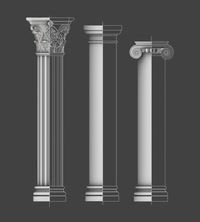


Full columns are decorative architectural elements with a 360-degree cylindrical form that add structural depth and refined aesthetics to buildings. Column structures traditionally made of marble, stone, or cast concrete in classical architecture have transitioned to innovative material technologies in modern building projects. Manufactured using high-density molded polyurethane (PU) technology, these circular covers feature a closed-cell structure with a density of 150-220 kg/m³, achieving an authentic stone appearance while remaining lightweight and putting only a limited load on the structure. Standard models such as P83TY20C with dimensions of 360x360x2790 mm establish balanced classical proportions in high-ceiling environments.
Technical Advantages Over Traditional Materials
Major challenges in marble, concrete, or plaster column claddings include excessive weight, fragility, and complex transport logistics. With a water absorption rate below 1%, these closed-cell cylindrical elements are highly resistant to humidity, moisture, and rot. With dimensional stability tested between -20 °C and +70 °C, these architectural components retain their structural form. Unlike plaster, they do not crumble under impact; unlike timber, they do not swell, crack, or twist due to moisture.
Practical Solutions via Modular and Hollow Design
Circular full columns are assembled by integrating three modular components: capital, shaft, and base. The hollow core design enables effective encasement of structural load-bearing steel columns, reinforced concrete posts, or exposed drainage and ventilation pipework. This design protects structural elements while establishing a refined classical aesthetic within the space.
- High-Density Shaft: Engineered with a 150-220 kg/m³ density index for strong resilience against physical impacts and surface wear.
- Weather and Climate Resistance: Maintains dimensional stability in high-humidity environments and exterior facade applications without shrinking or warping.
- Versatile Paint Options: Delivered with a factory-applied primer coat. Can be finished with marble effects, patina, or wood-grain painting techniques as desired.
- Fire Class B2 (DIN 4102-1):
Flexible Architectural Details for Designers and Contractors
The seamless fit of modular components in interior design and facade projects offers extensive creative freedom. Capital options compatible with Doric, Ionic, and Corinthian styles reflect historical architectural traditions within modern spaces. The factory primer coat provides a ready-to-paint surface; optional additional priming may be applied based on paint manufacturer warranty guidelines.
Usage Areas
Full round column models are widely preferred in exterior architectural designs and large-scale interior projects. In exterior facade applications, they serve as decorative encasements for structural supports under porticos and porches of detached villas, hotel facades, wedding halls, venue entrances, veranda supports, and poolside gazebos. In interior applications, they are utilized to aesthetically partition spaces in luxury hotel lobbies and receptions, restaurant and cafe concepts, ballrooms, expansive living room dividers, commercial display stands, and historical building restorations.
Installation
Before installation, substrate and ceiling surfaces must be leveled, cleaned of dust, and freed from debris. Shaft, capital, and base components are cut precisely at 45-degree miters or right angles. Silicone must never be used; a high-initial-tack polyurethane (PU) assembly adhesive should be applied. After applying adhesive to joint faces and floor contact areas, mechanical anchoring using screws or wall plugs is required for safety. Screw heads and joint seams are filled with quality filler. Once dry, smooth the surface using 180-220 grit sandpaper. Following an optional secondary coat of primer, complete the process with two coats of water-based or synthetic paint. Exterior installations require UV-resistant paint and exterior-grade masonry filler.
Care Information
Thanks to their high-density closed-cell structure, these columns maintain their structural integrity for years without demanding intensive maintenance. Routine cleaning requires only a damp cloth and non-abrasive mild detergents. Thinners, acids, or harsh chemical solvents must be avoided as they damage the paint layer. For exterior applications, renewing the UV-protective exterior paint as needed, depending on environmental exposure, preserves the pristine appearance. Minor surface scratches or impacts can be easily repaired with filler, light sanding, and touch-up paint.
