

Depth and Aesthetics on Walls: Corbel and Niche Designs
Wall niches and the supporting corbels that crown them, among the most exquisite elements of classical architecture, are revitalized in modern living spaces. Wall corbels and niches bring flat surfaces to life, adding a three-dimensional depth to interiors. Polure offers innovative polyurethane solutions that leave behind the heavy weight of traditional stone and plaster craftsmanship. Manufactured with advanced raw material technology, these architectural elements meet the highest aesthetic expectations while ensuring exceptional ease of installation.
High-Density Material Technology and Structural Durability
Designs in the Polure product range are manufactured from rigid polyurethane with a density of 150-220 kg/m³ (production target ~160 kg/m³). This high density provides a surface hardness comparable to wood while keeping the products exceptionally lightweight. Unlike plaster, which crumbles, cracks, or absorbs moisture and gains weight over time, this structure adds long-lasting value to your projects. The closed-cell structure of the material keeps water absorption below 1%, preventing deformation even in humid environments. Fully resistant to temperatures ranging from -100 °C / +80 °C, these products can also be safely specified for exterior facades.
Architectural Focal Points with Corbel and Niche Models
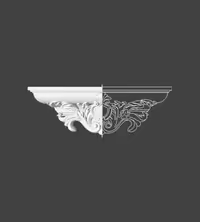
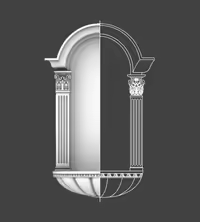
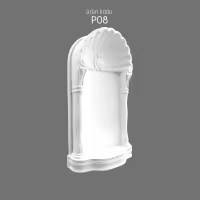
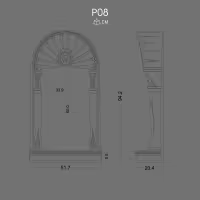
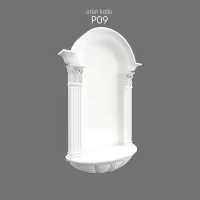
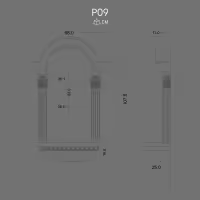
Guiding the eye and highlighting specific areas is critical in interior design. Niche alternatives like P08 (204x517x942 mm) and P09 (250x680x1070 mm) create magnificent display areas in grand salons, hotel lobbies, or villa entrances. Sculptures, vases, or lighting fixtures placed inside these niches elevate the prestige of any space. Wall corbels, on the other hand, function as supporting brackets, particularly under door arches, around mirrors, or at the base of wide wall panels. Large-bodied models like P507 (255x520x430 mm) offer baroque and classical flourishes, while models like P509 (92x360x250 mm) and P6807 (102x336x170 mm) are ideal for architects seeking minimal and elegant details. The P6809 (112x506x172 mm) model supports vertical lines and can also be used as a decorative support element on exterior facades.
Why Choose Polure Designs?
- Superior Detail Quality: Thanks to precision precast molds, sharp and exact motif clarity is achieved in every product, avoiding the dull patterns common in plaster.
- Resistance to Environmental Conditions: Completely immune to water, moisture, and rot, it remains pristine in bathrooms or outdoor applications.
- Easy Workability: It can be easily cut, sanded, and screwed just like wood, and can be finished with water-based or synthetic paints thanks to its factory-applied primer.
- Lightweight and Safe: It adds no extra static load to the building structure, installs quickly, and minimizes the risk of cracking or falling during seismic activity.
- Fire Resistance: Thanks to its flame-retardant properties, it self-extinguishes once the flame source is removed, contributing to overall fire safety.
Usage Areas
Corbel and niche designs offer a wide range of applications in both residential and commercial projects. In interiors, elegant niche installations can welcome guests in the entrance halls of villas and luxury apartments. In living rooms, symmetrically positioned wall corbels and niches behind dining tables allow for the artistic display of objects under soft lighting. In bedrooms, using symmetrical corbels within headboard paneling delivers the comfort of a classic luxury hotel room. In commercial spaces such as offices, boutique hotels, and restaurants, wall niches reflecting brand prestige create sophisticated presentation corners. On exteriors, they add depth to the building as decorative support elements alongside mansion or villa doors, complementing window casing combinations.
Installation
The wall surface to be treated must be completely dry, clean, and free of dust. Before installing the pre-made wall niche, its position should be precisely marked on the wall using a spirit level. Precise 45-degree miter cuts should be made for corner joints. Silicone-based adhesives must never be used during installation; instead, high-strength PU adhesives such as Polure Polfix should be preferred. After applying the adhesive to the channels on the back of the product, press it firmly against the wall and secure it mechanically with screws to prevent slipping until dry. Screw holes and joints are smoothed over with exterior-grade filler. Once the filler dries, sand with 180-220 grit sandpaper and apply primer. Finally, apply two coats of water-based or synthetic paint. For exterior applications, the use of UV-resistant paints is mandatory.
Care Information
Maintenance of these durable elements is exceptionally practical. Thanks to their anti-static surface properties, they have a very low tendency to accumulate dust. For weekly cleaning, dusting with a dry or slightly damp soft cloth is sufficient. Since the water absorption rate is negligible (under 1%), damp cleaning will not damage the material. Abrasive chemicals and stiff brushes must be avoided during cleaning. If any scratches occur on the surface due to impact, the area can be easily restored to its original appearance by lightly applying filler, sanding, and spot-painting.
