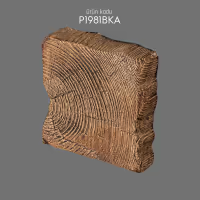
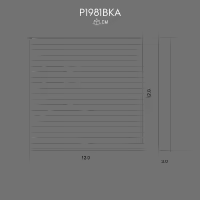
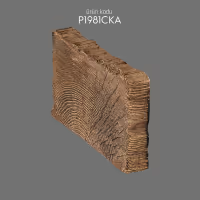
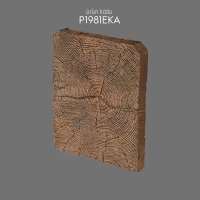
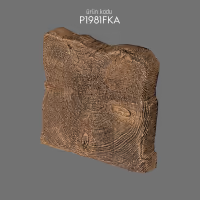
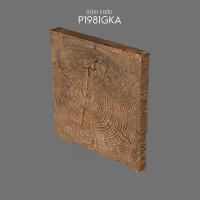
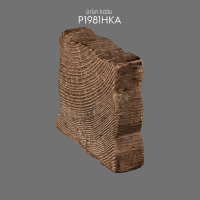
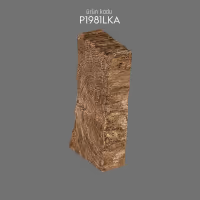
For designers wishing to bring the warmth of historic mansions, rustic chalets, and classical architecture into modern living spaces, ceiling details play a decisive role. The high cost, structural load risks, and deformational cracking over time associated with solid wood have forced projects to seek alternative solutions. Polure responds to this aesthetic need with advanced construction technology, offering the Beam - Rafter - Log collection. Manufactured from high-density rigid polyurethane raw material, these decorative profiles capture natural wood fibers, knots, and characteristic grain textures down to the finest detail.
Lightweight Design and Structural Balance
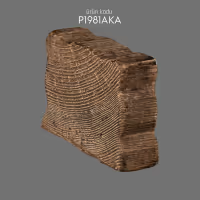
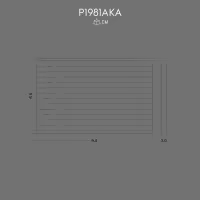
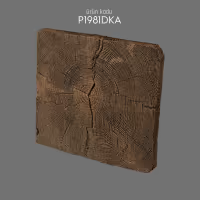
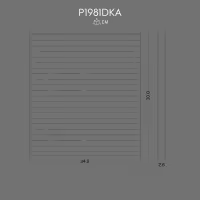
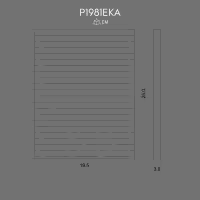
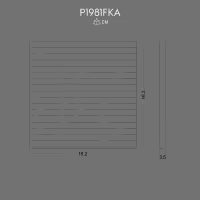
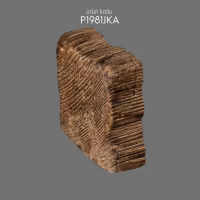
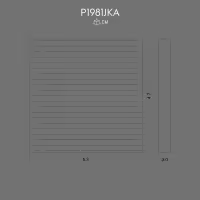
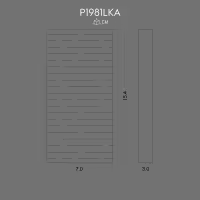
The static load imposed on buildings by traditional wooden rafters poses a serious safety risk, especially in restoration projects and light gauge steel structures. Weighing significantly less while offering a surface hardness close to real wood, these special ceiling elements boast a density of 150-200 kg/m³. This allows them to be safely installed without adding extra load to the ceiling structure. The product range, spanning from minimal dimensions like P1981AKA (65x94x30 mm) to large-scale cross-sections designed for spacious areas like P1981DKA (300x340x26 mm), offers flexible solutions for architectural projects.
Functional Architectural Solutions
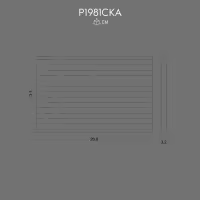
Beam, rafter, and log designs are not just decorative elements, but also smartly engineered solutions. Featuring a U-profile geometry, these designs allow existing concrete or steel beams, utility pipes, ventilation ducts, and electrical cables on ceilings to be concealed aesthetically. The P1981CKA model helps achieve a more balanced spatial proportion by visually dividing the ceiling in large-volume living rooms. In addition to the factory-primed white surface option, pre-colored alternatives in oak, walnut, and distressed tones significantly shorten installation times on jobsites.
Resistance to the Wear and Tear of Time
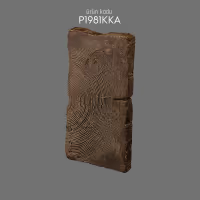
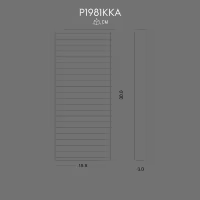
Natural timber warps, flexes, cracks, and invites pests over time depending on ambient humidity. In contrast, Polure ceiling elements are completely impervious to moisture thanks to their closed-cell structure. Showing high dimensional stability, these products do not suffer from shrinkage, expansion, or warping. Designs like the P1981KKA model, which blends classic details with modern techniques, offer high impact resistance and retain their original form for decades. This durability translates into a major investment advantage for hotel, restaurant, and villa owners looking to minimize maintenance budgets.
Scale Options for Diverse Spaces
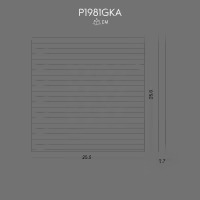
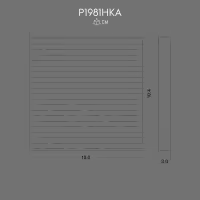
The ceiling height and overall area of a space are critical parameters in choosing the right rafter. In low-ceiling projects, slim-profile sections like P1981JKA (47x53x30 mm) or P1981HKA (104x100x30 mm) should be preferred to avoid cramping the volume. In high-ceiling restaurant chains, hotel lobbies, or atrium voids, grand models like P1981GKA (256x255x27 mm) or P1981EKA (250x195x30 mm) come to the fore to enhance the sense of depth. These designs can also be utilized as vertical column claddings on walls or as decorative window casings.
Usage Areas
The Beam - Rafter - Log series is widely used in interior design to add ceiling depth, bring a warm character to spacious living rooms, and camouflage ceiling imperfections. It is frequently preferred in residential living rooms, dining rooms, rustic kitchens, and bedroom ceilings. In commercial spaces, it enhances spatial acoustics and aesthetics in prestigious hotel lobbies, authentic restaurant chains, cafes, and concept offices. Additionally, it can be safely applied to semi-open outdoor areas such as porches, verandas, and sheltered balcony ceilings that are not exposed to direct sunlight to add depth to the structure.
Installation
Thanks to their lightweight structure, installing beams, rafters, and logs offers a practical and safe workflow. First, ensure the application surface is dry, clean, and smooth. For sharp-angled joints, profiles are cut at a 45-degree angle using a standard miter saw. During installation, polyurethane-based adhesives such as Polure Polfix must be applied to the contact surfaces; solvent-containing silicone adhesives should never be used. In addition to gluing, it is mandatory to mechanically secure the material to the ceiling construction with screws. Screw heads and joints are filled with exterior putty, then smoothed with 180-220 grit sandpaper. Finally, the process is completed by applying two coats of water-based or synthetic paint over the factory primer. For exterior applications, UV-resistant paint must be used.
Care Information
Unlike solid wood, these special ceiling elements do not require demanding maintenance processes such as periodic sanding, varnishing, or pest control. Cleaning with a slightly damp, soft cloth is sufficient. Abrasive chemicals and strong solvents that could damage the surface texture must be avoided. Thanks to their antistatic surface properties, dust accumulation is kept to a minimum. Superficial scratches from impacts or accidents can easily be filled with acrylic-based fillers and spot-painted to restore their original appearance.